
Agencies That Own Their Local Digital Footprint Will Win the AI Search Era
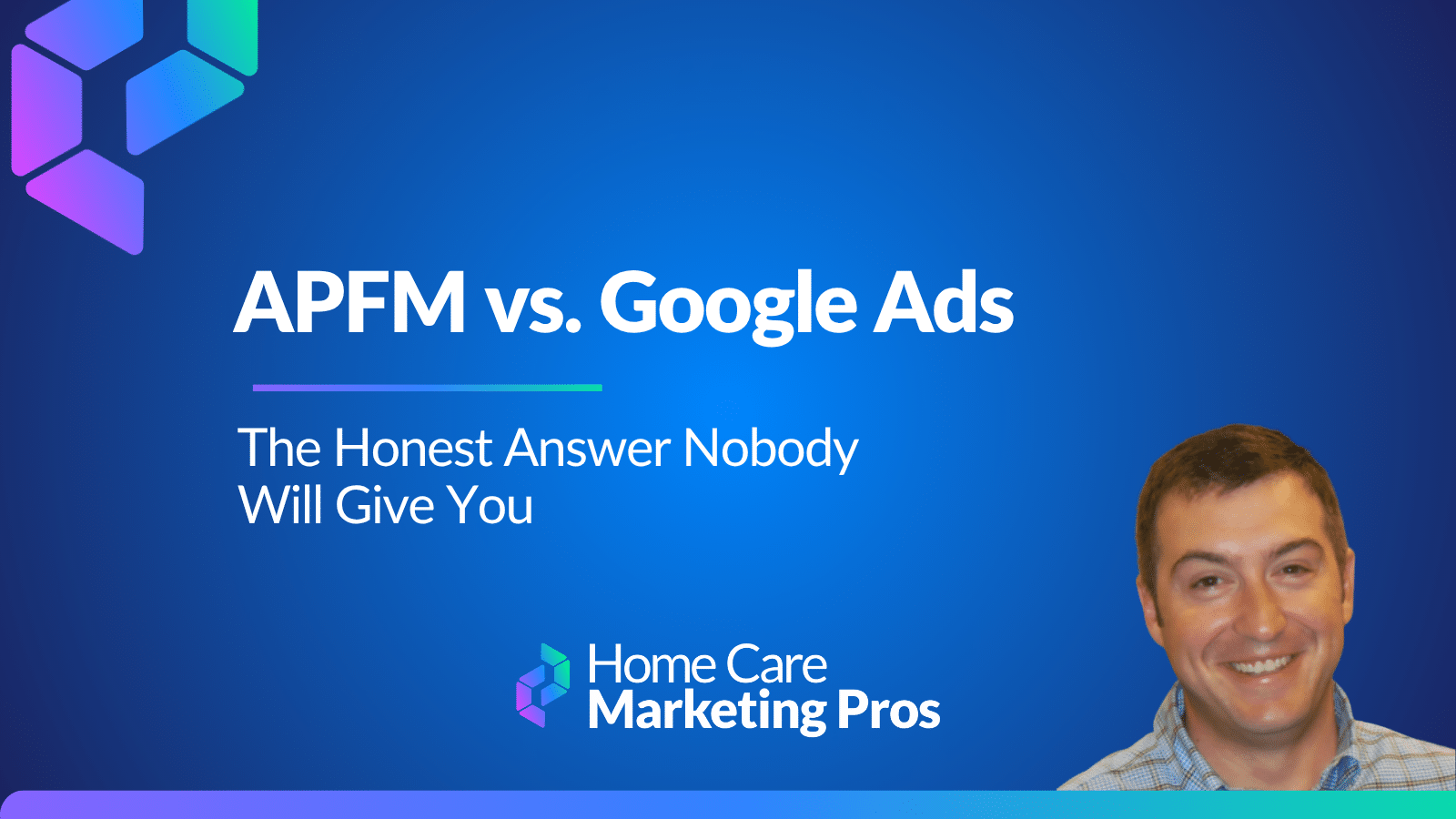
Families searching for home care aren’t just typing keywords into Google anymore — they’re asking AI tools like ChatGPT and Perplexity for trusted recommendations. In this episode of the Home Care Association of Florida’s Home Care Huddle podcast, host Patty Hyde sits down with our own Jason Chagnon, CEO of Home Care Marketing Pros, to unpack what it actually means to own your local digital footprint — and why that matters more than traditional SEO ever did.
What “Owning Your Digital Footprint” Really Means
Jason opens by challenging a common assumption: that good SEO is just a website with the right keywords, waiting for Google to notice you. That world, he says, is gone. Owning your digital footprint means controlling how your agency shows up everywhere a family might look — not just Google, but review sites, home care directories, healthcare referral networks, local news mentions, and social profiles. Every place your business name appears is a data point AI tools use to decide whether to recommend you.
The shift in numbers:
- 45% of consumers now use AI tools for local business recommendations — up from just 6% a year ago
- AI platforms cite a business’s website, listings, and reviews for 86% of recommendations
Key takeaway: You can have a beautiful, well-built website and still be invisible to AI search if your presence everywhere else is thin, inconsistent, or outdated. Owning your footprint means closing those gaps so you’re the answer everywhere a family searches.
The Three Biggest Drivers of Being Recommended by AI
When someone asks an AI tool for “the best home care agency near me,” Jason breaks down what actually influences the answer:
- On-page website content — Does your site clearly answer the real questions families are asking?
- Reviews — Not just star rating, but volume and recency. Fifty five-star reviews from a year ago signals stagnation, not trust.
- Directory listings — Is your agency consistently and accurately listed across the platforms AI actually pulls from?
One stat Jason highlights: over half of AI recommendations reference directory listings, not just a business’s own website — sometimes pulling from niche directories agencies have never even heard of.
Small Agencies Can Compete — and Often Win
A common frustration among independent agency owners is the assumption that national franchises have already won online. Jason pushes back on this directly. Franchise brands often have strong name recognition but a thin, generic corporate presence in any single local market — while an independent agency can build a deeper, hyperlocal footprint that AI tools actively reward.
The numbers back this up: 88% of local businesses have no active strategy for appearing in AI search results at all — leaving real opportunity on the table for agencies willing to do the work.
Key takeaway: Reviews are the great equalizer. A local agency that consistently collects and responds to reviews can outperform a national brand in AI search results, regardless of size.
Three Actions for the Next 90 Days
Asked what an agency with limited time and budget should prioritize, Jason narrows it down to fundamentals — going deeper on the basics rather than spreading thin across new channels:
- Fully optimize your Google Business Profile. Treat it as a living document, not a one-time setup. According to Google, a fully completed profile gets 7x more clicks and 70% more contacts (calls and form fills). Fill in every field — services, hours, service area, real photos of your team, FAQs, and regular posted updates.
- Build a review generation system, not a one-time push. With 31% of consumers now using ChatGPT for business recommendations, reviews are directly fueling what AI tells families about your agency. Make asking for a review part of your standard process at the right moment with every family.
- Audit your directory listings for consistency. Name, address, and phone number need to match everywhere — Facebook, Yelp, industry directories, everywhere your agency is listed. Inconsistent listings can read to AI as multiple different businesses instead of one credible brand.
Agencies that focus on these three areas can typically start seeing citations in AI results within two to three months.
Where This Is Headed
Jason expects families to increasingly start their search with a conversational question to AI rather than a search-engine query — describing a specific situation rather than typing “home care near me.” He also flags something worth sitting with: we’re moving into a zero-click environment, where AI can deliver a family your phone number and a recommendation without them ever visiting your website. That makes your reviews, listings, and directory presence more important than ever, since that’s the information feeding AI’s answer.
Jason’s closing advice: Stop thinking of your digital presence as a marketing expense — start thinking of it as a core business asset that compounds over time, and a direct extension of your mission to help families find the right solution.
This episode is part of the Home Care Huddle podcast, produced by the Home Care Association of Florida. Give it a listen for the full conversation between Patty Hyde and Jason Chagnon.

Get started with Home Care Marketing Pros.
Discover how Home Care Marketing Pros can help you grow your home care business, hire more caregivers and provide care for more clients.