
Speed to Lead: How Home Care Agencies Can Win More Clients
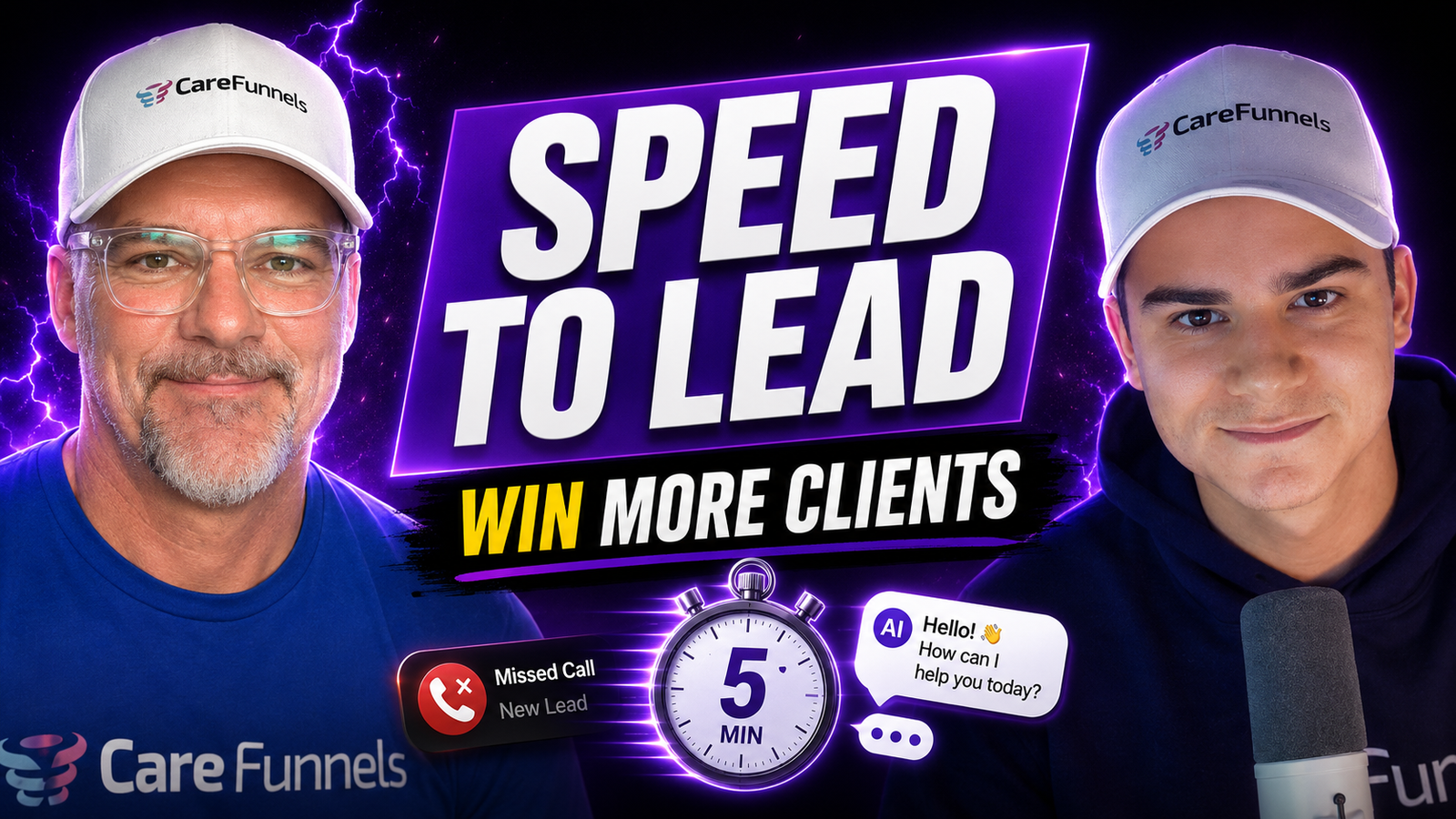
For most home care agencies, the moment a lead calls is the moment the sale is already being decided — whether anyone answers or not. In the first episode of the Home Care Marketing Pros Podcast, host Dylan sits down with co-founder Brady Quick to unpack “speed to lead”: the idea that how fast you respond to a new inquiry matters just as much as the quality of the lead itself.
Why “Speed to Lead” Is the Most Overlooked Growth Lever in Home Care
Most families searching for home care aren’t calling from a place of calm research — they’re calling in crisis. Brady points out that the person on the other end of the line is often an adult daughter making a decision under stress, sometimes after a hospital discharge or a sudden change in a parent’s condition.
That emotional urgency cuts both ways. It means your agency has a real chance to build trust fast — but it also means that if the call goes to voicemail, that same family will simply call the next agency on the list. There’s no loyalty to wait around for a callback when someone else answers first.
Key takeaway: Speed to lead isn’t a “nice to have” for home care agencies — it’s a direct driver of whether a lead becomes a client or becomes a competitor’s client.
The Data Behind the Five-Minute Rule
Brady cites research showing leads are dramatically more likely to convert when contacted within the first five minutes of inquiry, with conversion odds dropping sharply the longer a response is delayed. For agencies relying on paid lead generation sources like A Place for Mom and Caring.com, this matters even more — those leads are often being shopped to multiple agencies simultaneously, so response time becomes a competitive advantage, not just a courtesy.
What’s a Client Actually Worth?
One of the most useful reframes in the episode is around lifetime value. Brady walks through why a single missed call isn’t just a missed call — it’s a missed shot at a client relationship worth $18,000–$40,000, and potentially well into six figures over the life of care. When you look at a missed lead through that lens, the cost of a slow response time — or no CRM to track it — becomes a lot more concrete.
Common Reasons Agencies Miss Leads
The conversation digs into why response times slip in the first place, including:
- No after-hours or weekend coverage for incoming calls
- Leads getting buried in email or spreadsheets instead of a tracked pipeline
- No clear ownership of who’s responsible for first response
- Lack of visibility into which lead sources are converting — and which aren’t
Building a Sales Process and CRM Strategy
Brady and Dylan discuss what a real sales process looks like for a home care agency — one that tracks every lead, every pipeline stage, and every follow-up touchpoint instead of relying on memory or sticky notes. This is where a home care-specific CRM becomes less of a “tech nice-to-have” and more of the backbone of consistent lead conversion.
They also cover how Home Care Marketing Pros structures its own follow-up process for clients, including how a content engine — blogging, SEO, and organic visibility — feeds new leads into that same tracked system rather than leaving growth to chance.
The Full Growth System: It All Works Together
The episode closes on a theme that runs through a lot of HCMP’s approach: SEO, content, PPC, and lead response aren’t separate initiatives — they’re one system. A strong website and content strategy bring the leads in; a fast, CRM-backed sales process is what keeps them from walking out the door.
Brady’s #1 tip: Use a CRM, and actually track your data. You can’t fix a leak you can’t see.

Get started with Home Care Marketing Pros.
Discover how Home Care Marketing Pros can help you grow your home care business, hire more caregivers and provide care for more clients.